

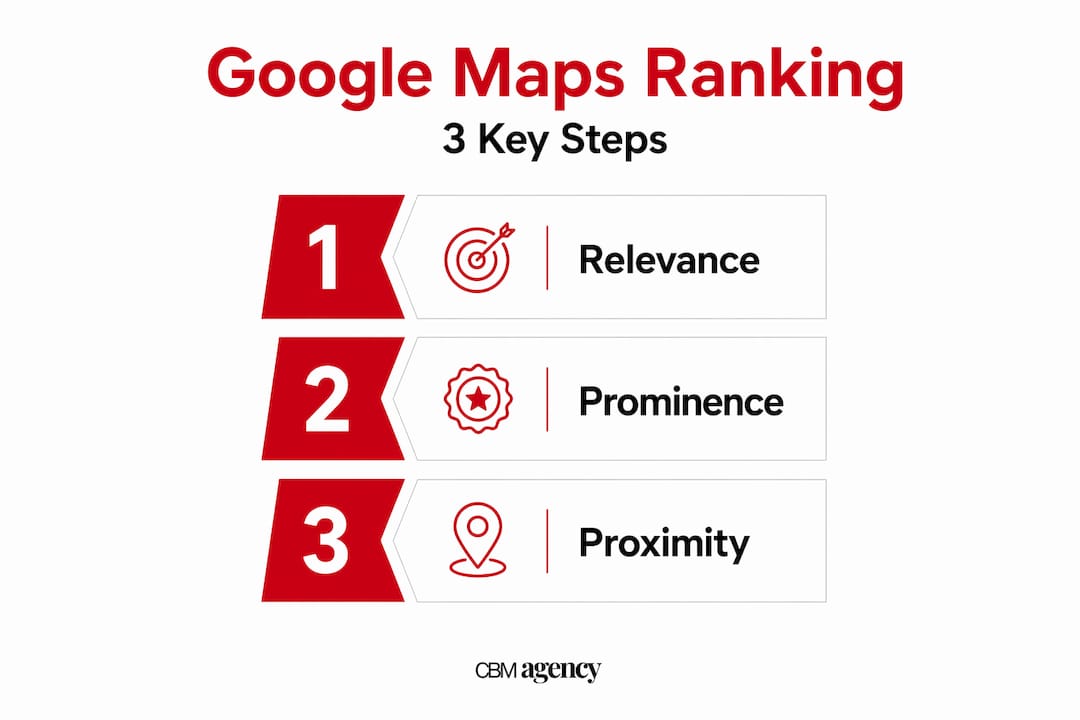
If you run a transportation business in the United States and your Google Maps profile isn't showing up when local customers search, your fleet stays parked while competitors get the calls. This google maps ranking guide exists to change that. The algorithm behind Maps rankings comes down to three factors: relevance, distance, and prominence. Distance is largely out of your hands. The other two are not. This guide walks you through exactly how to control what you can, build the signals that matter most, and turn your Google Maps listing into a real booking engine.
Table of Contents
- Understanding Google Maps ranking factors
- Optimizing your Google Business Profile for maximum relevance
- Building prominence through reviews and reputation management
- Managing proximity: realistic strategies for transportation businesses
- Creating a sustainable Google Maps ranking routine
- Why beating proximity requires mastering prominence and relevance first
- Boost your transportation business's Google Maps ranking with CBM Agency
- Frequently asked questions
Key Takeaways
| Point | Details |
|---|---|
| Three ranking pillars | Google Maps ranking depends on relevance, distance, and prominence, with prominence having the greatest impact. |
| Optimize relevance | Use specific primary and secondary categories plus detailed service descriptions to improve relevance in searches. |
| Build prominence | Gain and respond to frequent, recent reviews to increase your trustworthiness and ranking signals. |
| Manage distance realistically | Set accurate service areas instead of manipulating addresses, as distance is mostly uncontrollable. |
| Maintain a routine | Consistent Google Business Profile activity and review management sustain and improve your position over time. |
Understanding Google Maps ranking factors
Google Maps does not rank businesses randomly. Relevance, Distance, and Prominence are the three official pillars of Google's local ranking algorithm, and each one plays a different role depending on the search query and the searcher's location.
Here is what each pillar actually means for your transportation business:
- Relevance measures how well your profile matches what someone is searching for. If a traveler types "airport shuttle near me" and your profile says "Transportation Company," Google has little reason to show you. The more specific and detailed your profile content, the better Google can match you to the right searches.
- Distance is the physical gap between your verified business address and the searcher's location. Local results are determined by these three pillars together, but distance is the one factor you cannot change by editing your profile.
- Prominence reflects how well-known and trusted your business appears online. Reviews, citations, website authority, and profile activity all feed into this score. A business with 400 five-star reviews and a fully active profile will often outrank a closer competitor with 12 reviews and a half-empty listing.
The key insight most transportation business owners miss: you realistically control about 85% of the algorithm. Google Business Profile optimization directly impacts both relevance and prominence. Distance is just the 15% you live with. Start acting accordingly.
Optimizing your Google Business Profile for maximum relevance
Your profile is the front door to every booking that starts with a Google search. Getting it right is not optional. Your primary GBP category is the single most important relevance signal, so precision here pays off more than almost anything else you do.
Follow these steps to build a profile that earns rankings:
- Choose a specific primary category. "Airport Shuttle Service" outperforms "Transportation" every time. The more precisely your category reflects your actual service, the tighter the match to real customer searches.
- Add up to 9 secondary categories. If you also offer corporate car service, limo rentals, or medical transport, each of those can be a secondary category. Set the most specific primary category, then fill secondary slots with every service type you realistically provide.
- List every service you offer. Use the Services section and write each one in plain language your customers actually use. "Executive airport transfer" and "group event transportation" are better than "ground transport solutions."
- Write a business description that does real work. Mention your top three services and the city or metro area you serve. Keep it natural, not stuffed with keywords. Example: "We provide airport shuttle, corporate car service, and event transportation throughout Miami and Broward County."
- Align your website with your profile. If your GBP says "Airport Shuttle Service" but your website never uses that phrase, Google sees a disconnect. Your site pages need to reinforce the same terms. Start with setting up your Google Business Profile correctly before worrying about anything else.
Pro Tip: Do not use your business description to brag. Use it to describe what you do, where you do it, and who you serve. That is the content Google reads to determine relevance.
Building prominence through reviews and reputation management
Reviews are the part of prominence you can actively build, and they carry serious weight. Reviews account for roughly 20% of your local pack ranking and are the second most important factor after your GBP itself.

Here is what the numbers look like for competitive local markets:
| Metric | Minimum to compete | Strong position |
|---|---|---|
| Total reviews | 100 | 400+ |
| Average rating | 4.5 stars | 4.7+ stars |
| Review recency | Within 30 days | Weekly new reviews |
| Response rate | 80%+ | 100% |
Businesses aiming to compete in the local 3-pack typically need 100 to 800 reviews with an average rating above 4.5. That range is wide because it depends on your market. A smaller city may only need 100 to dominate. Miami or Chicago might require 500.
Key tactics for building review prominence:
- Maintain review velocity. One to three new reviews per week tells Google your business is active and trusted. A burst of 50 reviews followed by two months of silence looks suspicious and stops working.
- Ask after the ride, not before. Send a follow-up text or email within an hour of service completion with a direct link to your Google review page. Friction kills conversion.
- Respond to every review, fast. Within 48 to 72 hours is ideal. Your responses are public and indexed. They signal engagement.
- Watch what customers write. When a passenger mentions "punctual driver" or "professional airport transfer," that language reinforces your relevance for those exact searches. You can gently guide customers by reminding them what service they used, though never tell them what to write.
Pro Tip: When managing your reviews and reputation, treat negative reviews as visibility opportunities. A calm, professional response to a one-star review often converts more new customers than five generic five-star reviews.
Managing proximity: realistic strategies for transportation businesses
Distance is real, but it is not a death sentence for your rankings. Distance is calculated by Google's algorithm from the searcher's location to your verified business address or service area, and it cannot be manipulated. Accept that, and move on.
Here is what you can do instead:
- Set your service area accurately. In your GBP settings, add every city, zip code, and county you genuinely serve. Do not overextend. Google knows when a single van operation claims to serve 40 cities.
- Do not fake your address. Using a virtual office or a friend's address in a different neighborhood to appear closer to customers is a violation of Google's guidelines. A highly prominent and relevant business can outrank a closer competitor. Trying to target other areas by manipulating your address often leads to suspension.
- Use rank tracking tools. Tools that show your visibility across a geographic grid let you see exactly where you rank strong and where you fall off. That data tells you where to focus your citation building.
- Build citations for the areas you serve. Citation strategies for trucking and delivery businesses follow similar principles: consistent name, address, and phone number across local directories signals legitimacy.
The businesses that try to game proximity almost always waste time they could have spent building prominence. That effort compounds over time. Gaming it does not.
Understanding proximity and AI search together matters now more than ever, as AI-powered search results are increasingly weighing prominence signals the same way Maps does.
Creating a sustainable Google Maps ranking routine
One-time optimization is not enough. Regular GBP activity like posts, photo uploads, and review responses moves prominence signals within days and is key to consistent rankings. Treat your GBP like a living asset, not a form you fill out once.
Here is a routine that actually works:
- Post one update per week. Announce a promotion, a new route, a seasonal service, or a company milestone. Even a short post works. Google notices the activity. Profiles not updated in 30 days appear abandoned and lose rankings.
- Upload two to three photos per week. Show your vehicles, your drivers in uniform, pickup locations, and events you have served. Fresh photos signal an active, credible business.
- Respond to all new reviews within 7 days. Set a calendar reminder if you need to. Older reviews should receive periodic responses too, especially if they were left unanswered.
- Collect one to three reviews per week. Build this into your operations. Every driver can be part of the process with a simple post-trip message template.
- Audit your profile monthly. Check that your hours, phone number, service area, and website URL are still accurate. A single wrong detail can hurt both rankings and conversions.
| Task | Frequency | Time required |
|---|---|---|
| GBP post | Weekly | 10 minutes |
| Photo upload | Weekly | 5 minutes |
| Review responses | Within 7 days | 5-10 minutes each |
| New review collection | Ongoing | 2 minutes per client |
| Profile audit | Monthly | 20 minutes |
Pro Tip: Google Business Profile activity strategies that include vehicle photos consistently generate more profile views than interior or generic stock images. Real photos of your actual fleet build trust before a customer ever calls. Pair this with a weekly ranking improvement routine and you build compounding visibility over time.
Why beating proximity requires mastering prominence and relevance first
Here is the uncomfortable truth we see repeatedly: most transportation business owners spend energy worrying about where their office is located instead of building the signals that actually move rankings. Proximity is a dominant but uncontrollable factor. Business owners should focus on the 85% of the algorithm they can control, which is relevance and prominence.
We have seen transportation companies ranked consistently in the top three for high-value searches across a metro area they are not geographically centered in. How? Because their profile was precise, their reviews were recent and numerous, their citations were consistent, and their GBP showed activity every single week. The competitor two miles closer had 18 reviews from three years ago and a profile that said "Transportation Company."
The real risk is not being far from the searcher. The real risk is giving Google no reason to trust you. Google's job is to show the best result, not the closest one. When you build a profile that clearly communicates what you do, who you serve, and proves via social proof that customers trust you, proximity becomes a tiebreaker rather than the deciding factor.
Stop trying to fix what you cannot change. The importance of prominence over proximity is not theory. It is what separates transportation businesses that fill their schedules through Google from the ones that rely entirely on referrals and hope.
Boost your transportation business's Google Maps ranking with CBM Agency
You now have the framework. The question is whether you have the time and bandwidth to execute it consistently while running your operations.
CBM Agency works specifically with transportation businesses to build the kind of Google Maps presence that turns searches into bookings. From Google Business Profile optimization services to citation building, review velocity programs, and ongoing content, we handle the work that compounds into real rankings. Our local marketing services are built around the transportation industry, not adapted from a generic template. If you want to see what that looks like in practice, check out our Google Maps case study for service businesses. When you are ready to move, reach out and let's build a plan specific to your service area.
Frequently asked questions
How important is my Google Business Profile for ranking on Google Maps?
It is the most critical single asset in your local ranking. Google Business Profile is the most important ranking factor after reviews, directly shaping your relevance and prominence scores.
Can I improve my Google Maps ranking if my business is far from the searcher?
Yes. A highly prominent business can outrank closer competitors by building strong reviews, keeping the profile active, and maintaining accurate, specific service area settings.
How many reviews do I need to rank competitively in Google Maps?
Transportation businesses targeting the local 3-pack typically need between 100 and 800 reviews with an average above 4.5 stars. Minimally competitive businesses start at 100, but your specific market will determine what it takes to hold a top-three position.
What is review velocity and why does it matter?
Review velocity is how consistently new reviews arrive over time. Review velocity is a high-ROI factor that influences ranking and trust signals within weeks, signaling to Google that your business is active and earning customer trust regularly.
Is it safe to change my business address to appear closer to more customers?
No. Manipulating your address to target different areas risks profile suspension. Instead, accurately configure your service area within your verified location and invest in prominence-building activities to compete across your full market.