

Your Google Maps listing is the front door to your business, and Google ranks local results by three core factors: relevance, distance, and prominence. Most local businesses control at least two of those three. The best practices for Google Maps in 2026 center on a fully optimized Google Business Profile (GBP), a consistent review strategy, website local SEO, and active off-site presence. Get all four working together and your listing stops being a brochure. It becomes a booking engine.
1. Best practices for Google Maps start with your Google Business Profile
Your GBP is the single most controllable factor in your Maps ranking. Category accuracy and profile completeness carry the highest impact on GBP-driven visibility, which means a half-filled profile is a direct ranking disadvantage.
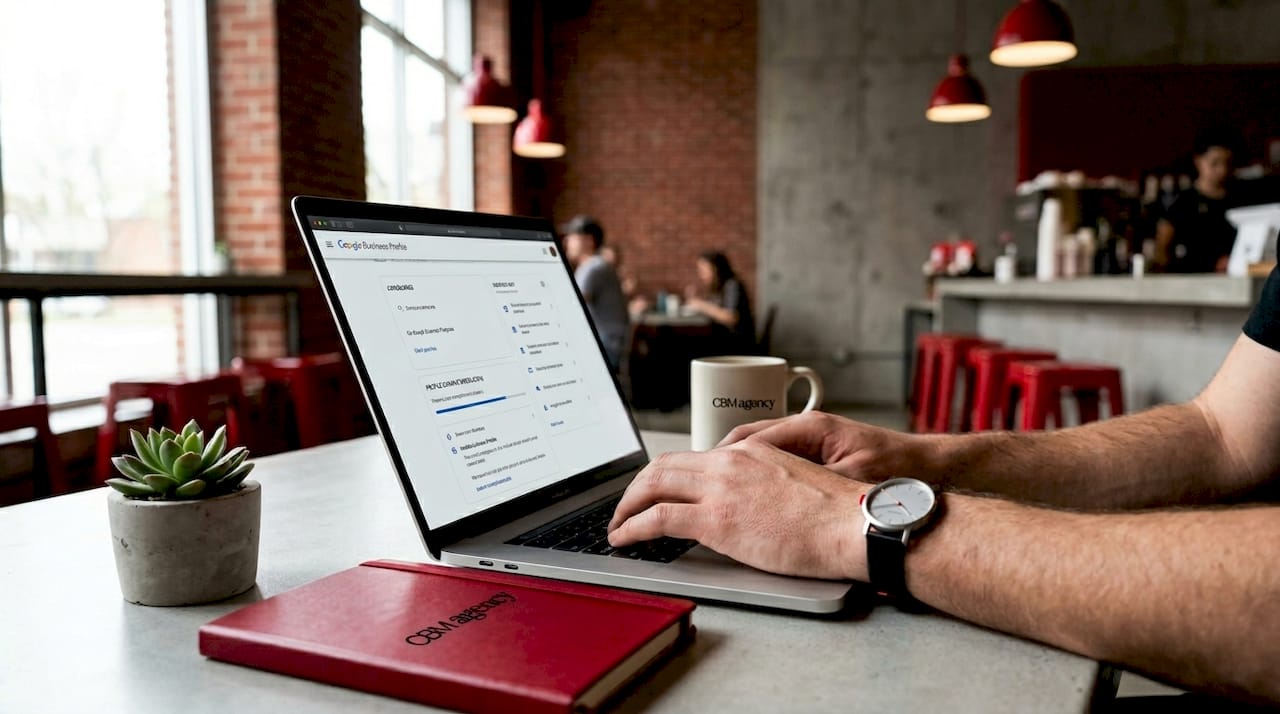
Start by claiming and verifying your listing through Google Search or Google Maps. Verification confirms to Google that you are the legitimate owner and unlocks full editing access. Without it, your profile is essentially unmanaged and vulnerable to third-party edits.
Once verified, treat every field as required:
- Primary category: Choose the most specific option available. "Limousine Service" outperforms "Transportation" for a chauffeur company every time.
- Secondary categories: Add relevant ones, but do not stuff. Three to four accurate categories beat ten vague ones.
- Business description: Write 250 to 750 characters that describe what you do, who you serve, and where. Include your city and primary service naturally.
- Hours and special hours: Keep these current. Outdated hours are one of the fastest ways to lose customer trust and trigger negative reviews.
- Services and products: List every service you offer with a short description and price range if applicable.
- Photos: Upload high-quality images of your vehicles, office, team, and completed work. Fresh photos signal an active, trustworthy business.
- Q&A section: Seed it with your own questions and answers. This controls the narrative before customers ask something you have not addressed.
Pro Tip: Review your GBP on a mobile device monthly. That is how most customers see it, and formatting issues or missing fields are easier to spot from a phone than a desktop.
2. How to build a review strategy that actually works in 2026
Reviews account for roughly 20% of local pack ranking influence in 2026, making them one of the highest-leverage activities you can invest time in. Volume matters, but so does recency and response rate.
Google's 2026 policy update is strict. Incentivizing reviews, using on-site kiosks, gating feedback, or pressuring customers are all prohibited and now carry active enforcement. Violations result in review removal and profile penalties. The only compliant path is authentic, voluntary feedback.
Here is what a compliant review strategy looks like in practice:
- Send a review request by email or SMS within 24 hours of service completion.
- Include a direct link to your Google review page to reduce friction.
- Use QR codes on receipts, invoices, or thank-you cards for in-person touchpoints.
- Never ask only satisfied customers. That is called gating, and it violates policy.
- Respond to every review, positive or negative, within 48 hours.
Responding to negative reviews publicly shows future customers how you handle problems. A calm, professional response to a one-star review often does more for your reputation than ten five-star reviews with no replies.
Automating review requests post-service while monitoring for unnatural spikes keeps your acquisition steady and penalty-free. A sudden jump from 10 to 80 reviews in two weeks triggers algorithmic scrutiny. Consistent velocity, say two to five new reviews per week, builds trust over time without raising flags.
Pro Tip: Tools like Birdeye or Podium automate compliant review requests at scale. They send the request at the right moment and track response rates so you can see what messaging converts best.
3. How website local SEO reinforces your Google Maps listing
Your website and your GBP are not separate assets. Google treats them as connected signals. Service-area pages, local keywords, and consistent NAP data on your site directly reinforce your Maps performance.
NAP stands for Name, Address, and Phone number. Every instance of your business name, address, and phone number on your website must match your GBP exactly. A suite number written as "Ste 4" on your site but "Suite 4" on your GBP creates an entity conflict that dilutes trust.
| Website element | What it does for Maps visibility |
|---|---|
| Location pages | Targets city-specific searches and signals geographic relevance |
| LocalBusiness schema | Tells Google your NAP, hours, and category in structured data |
| Embedded Google Map | Confirms physical location and improves engagement signals |
| Mobile responsiveness | Reduces bounce rate from Maps-driven mobile traffic |
| Page speed | Keeps visitors on-site after clicking through from Maps |
Embedding LocalBusiness schema accurately on your site, aligned with your GBP data, reduces entity conflicts and improves local search trust. Use Google's Rich Results Test to verify your schema is reading correctly after implementation.
Create a dedicated page for each city or service area you cover. A Miami-based transportation company serving Fort Lauderdale and Boca Raton should have three separate location pages, not one generic "service area" paragraph. Each page needs unique content, a local keyword in the H1, and a Google Maps embed. Check out this mobile SEO guide for additional site-level improvements that support your Maps presence.
4. Building prominence with citations, backlinks, and engagement
Prominence is the hardest of Google's three ranking factors to control directly, but it is also the most durable. Consistent NAP citations and local backlinks from credible sites increase Google's trust in your business and push your Maps ranking higher.
Start with the foundational directories: Yelp, Bing Places, Apple Maps, Facebook, and your local Chamber of Commerce. Then move to niche directories relevant to your industry. A transportation company should be listed on sites like Thumbtack, Angi, and industry-specific platforms. Each listing is a citation, and each citation reinforces your NAP consistency.
- Audit your existing citations using a tool like BrightLocal or Whitespark. Inconsistent listings actively hurt your ranking.
- Sponsor local events or partner with complementary businesses to earn backlinks from local news sites and community organizations.
- Pitch your business to local "best of" lists and neighborhood blogs. A single mention in a local publication carries more ranking weight than dozens of generic directory links.
- Track engagement signals inside your GBP dashboard: calls, direction requests, and website clicks all tell Google your listing is actively used.
Pro Tip: When you earn a local press mention, ask the publication to link directly to your GBP or website. Many will do it if you ask. That backlink is worth more than ten generic directory submissions.
5. How to monitor and maintain your Maps profile over time
A well-optimized profile is not a set-it-and-forget-it asset. Google's 2026 algorithm favors businesses that actively manage their profiles with fresh content and responsive interactions. Maintenance is a ranking signal.
Here is a practical monthly maintenance routine:
- Check for unauthorized edits. Google allows the public to suggest changes to your listing. Review your profile weekly for edits you did not make, especially to your address, phone number, or category.
- Upload new photos. Weekly posts and fresh photos measurably raise impressions and interactions. Aim for at least four new photos per month.
- Post a GBP update. Use the Posts feature to share promotions, service updates, or seasonal offers. Posts expire after seven days, so schedule them in advance.
- Audit for duplicate listings. Duplicate GBP entries split your ranking authority. Search your business name on Google Maps and report any duplicates you find.
- Review your KPIs. Inside GBP Insights, track search appearances, direction requests, calls, and website clicks month over month. Declining numbers signal a problem before it becomes a crisis.
- Update hours for holidays and seasonal changes. Google surfaces businesses with accurate hours. A customer who shows up during a listed open hour and finds you closed will leave a negative review.
Monitoring your GBP for changes and duplicate listings protects the ranking integrity you have worked to build. Tools like BrightLocal, Semrush's Listing Management, or Google's own alerts make this process faster and more reliable.
Key takeaways
Consistent Google Maps performance requires integrating GBP optimization, authentic reviews, website local SEO, and active citation building into one ongoing strategy.
| Point | Details |
|---|---|
| GBP completeness drives ranking | Category accuracy and full profile completion are the top controllable ranking factors. |
| Reviews need velocity, not just volume | Steady, compliant review acquisition outperforms large but outdated review pools. |
| Website SEO reinforces Maps visibility | Matching NAP data and LocalBusiness schema on your site reduces entity conflicts with Google. |
| Citations build prominence | Consistent listings across Yelp, Bing Places, and niche directories increase Google's trust. |
| Active management is a ranking signal | Weekly photo uploads, GBP posts, and KPI monitoring signal an engaged, trustworthy business. |
What I have learned from watching Maps rankings shift in 2026
I have worked with enough local businesses to say this plainly: the ones who treat their Google Maps listing as a living asset consistently outrank the ones who optimize once and walk away. The gap between those two groups is widening in 2026.
What surprises most business owners is how much the review response rate matters. I have seen profiles with 40 reviews outrank competitors with 200 reviews, simply because the smaller profile responded to every single review and the larger one responded to none. Google reads engagement. It does not just count stars.
The other shift I keep watching is how tightly Google now connects your website's local SEO signals to your Maps ranking. A few years ago, you could rank well on Maps with a weak website. That window is closing. Businesses with strong location pages, clean schema markup, and fast mobile sites are pulling ahead of competitors who have great GBP profiles but outdated websites.
My honest advice: stop chasing shortcuts. The businesses I see penalized in 2026 are almost always the ones who bought reviews, stuffed categories, or let their profiles go stale. The ones climbing are doing the boring, consistent work. Claim your profile, respond to reviews, match your NAP everywhere, and post something new every week. That is not glamorous. It works.
— Meshia
How Cbmagencymiami helps you rank higher on Google Maps
Cbmagencymiami works with transportation and service businesses to turn their Google Maps listing from a passive placeholder into a lead-generating asset. The team handles GBP setup, category optimization, review strategy, citation building, and local SEO so your business shows up when customers search. If you want to see what that looks like in practice, the Google Maps case study shows real results from real service businesses. For a full breakdown of what profile management includes, visit the GBP optimization page and see how Cbmagencymiami builds visibility that converts into calls and bookings.
FAQ
What are the top ranking factors for Google Maps?
Google ranks Maps results by relevance, distance, and prominence. Profile completeness, category accuracy, review signals, and consistent NAP citations are the primary controllable factors.
How many reviews do I need to rank in the local pack?
There is no fixed number. Review recency, response rate, and steady review velocity matter more than raw count. A business with 40 recent, responded-to reviews often outranks one with 200 old, unanswered ones.
Can I ask customers to leave a Google review?
Yes, but you cannot offer incentives, use on-site kiosks, or gate feedback to only happy customers. Google's 2026 review policy enforces these rules with review removal and profile penalties.
Does my website affect my Google Maps ranking?
Yes. Local keywords, location pages, LocalBusiness schema, and matching NAP data on your site all send signals that reinforce your Maps visibility. A strong website and a strong GBP work together, not independently.
How often should I update my Google Business Profile?
Update your profile at minimum once per week. Post a GBP update, upload new photos, and check for unauthorized edits. Active profile management is a direct ranking signal in Google's 2026 algorithm.