
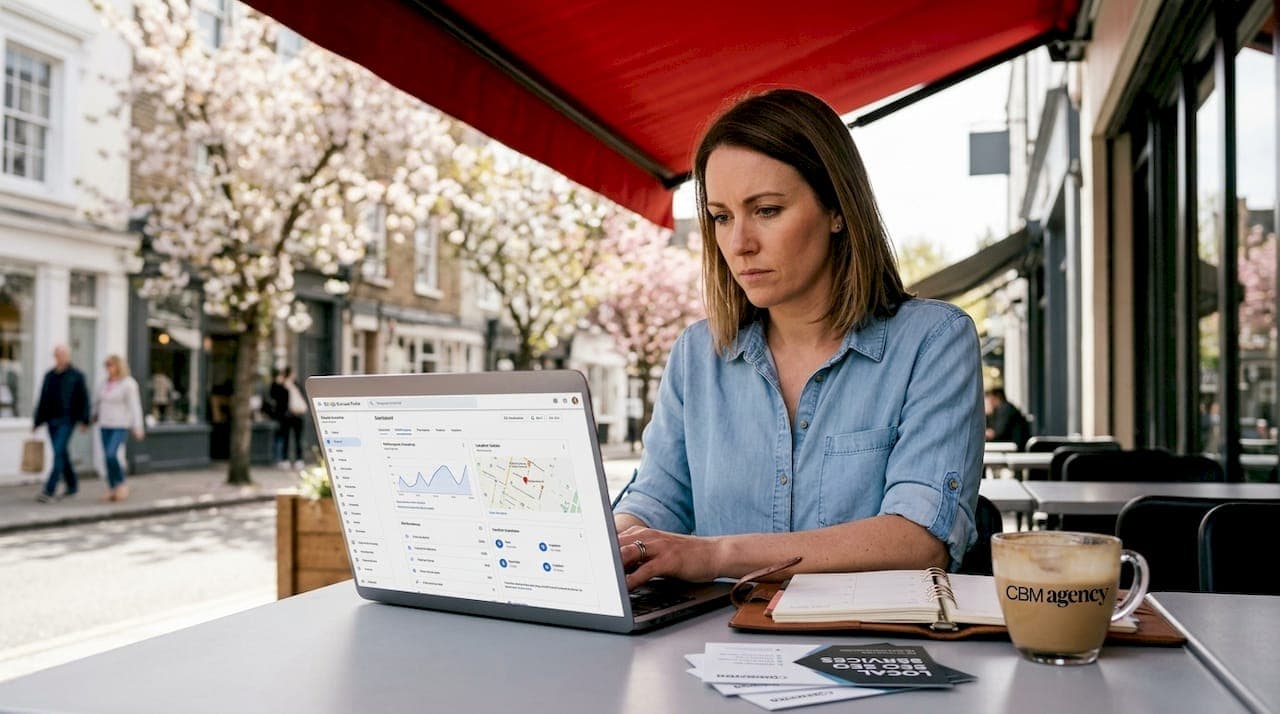
If you search "car service near me" from Miami, you will see completely different results than someone searching the same phrase from Chicago. That is local SEO working in real time. Local SEO optimizes your digital presence to appear when nearby customers are actively searching for what you offer. It is not just a version of regular SEO with a city name attached. It is a distinct system with its own ranking signals, its own tools, and its own rules. This guide breaks it all down so you can use it.
Table of Contents
- Key takeaways
- What local SEO actually is
- How the Google local pack works
- Practical local SEO strategies you can use now
- Common local SEO pitfalls to avoid
- My perspective on what local SEO really takes
- How Cbmagencymiami can move your rankings
- FAQ
Key takeaways
| Point | Details |
|---|---|
| Local SEO is location-driven | It targets customers searching near your business, not a broad national audience. |
| Google Business Profile is the foundation | An accurate, optimized profile is the single most important local SEO asset you control. |
| Three ranking factors dominate | Relevance, distance, and prominence determine who appears in the local pack. |
| Consistency prevents penalties | Mismatched business names, addresses, or duplicate profiles can trigger suspension. |
| Rankings shift daily | Local results fluctuate based on the searcher's exact location and device at query time. |
What local SEO actually is
Local SEO promotes your business to appear in geographically tied searches, things like "limo service downtown Atlanta" or "plumber open now." It combines traditional SEO signals with an additional location-based ranking layer that Google uses to match searchers with nearby businesses.
Think of it this way. Regular SEO is trying to rank a blog post so anyone in the country can find it. Local SEO is making sure that when someone two miles from your office searches for what you do, your business shows up before your competitors do. The front door to your business is no longer your physical address. For most customers, it is Google.
Here is what local SEO actually involves:
- Google Business Profile (GBP): Your profile is the core data source Google uses to understand your business. Name, address, phone number, hours, category, photos, and reviews all live here.
- Citations: These are mentions of your business name, address, and phone number (NAP) across third-party sites like Yelp, Apple Maps, and industry directories. Consistent citations build trust with search engines.
- On-page localization: Adding city-specific content, location pages, and schema markup to your website helps Google connect your site to your geographic area.
- Reviews: The volume, recency, and sentiment of your customer reviews directly affect your local prominence score.
- Local link signals: Backlinks from locally relevant sites, such as chambers of commerce or regional news outlets, strengthen your authority in a specific area.
Google customizes local results based on where the searcher is physically located at the moment of the query. Two people searching the same term from two blocks apart can see different listings. That personalization is what makes local SEO a category of its own.
Pro Tip: If you serve multiple cities, build a dedicated location page for each one with unique content. A single generic "Service Areas" page does not carry the same weight as separate, specific pages.
How the Google local pack works
When you search for a service with local intent, the first thing you often see is a map with three business listings underneath it. That block is called the Google Local Pack, sometimes called the 3-Pack. It appears above the organic search results and pulls its data directly from Google Business Profiles.
Getting into the local pack is not just about being closest to the searcher. The three primary ranking factors are:
- Relevance: How well your profile matches what the searcher typed. A profile with accurate categories, a complete description, and relevant services will outperform a sparse one.
- Distance: How far your business location is from the searcher or from the location mentioned in the query. Proximity matters, but it is not the only signal.
- Prominence: How well-known and trusted your business is. This includes your review rating, number of reviews, backlinks to your website, and how often your business appears in citations across the web.
There is no permanent number one spot in the local pack. Rankings fluctuate based on the searcher's location and query time, which means your position when checked from your office is not necessarily the position a customer sees from across town.
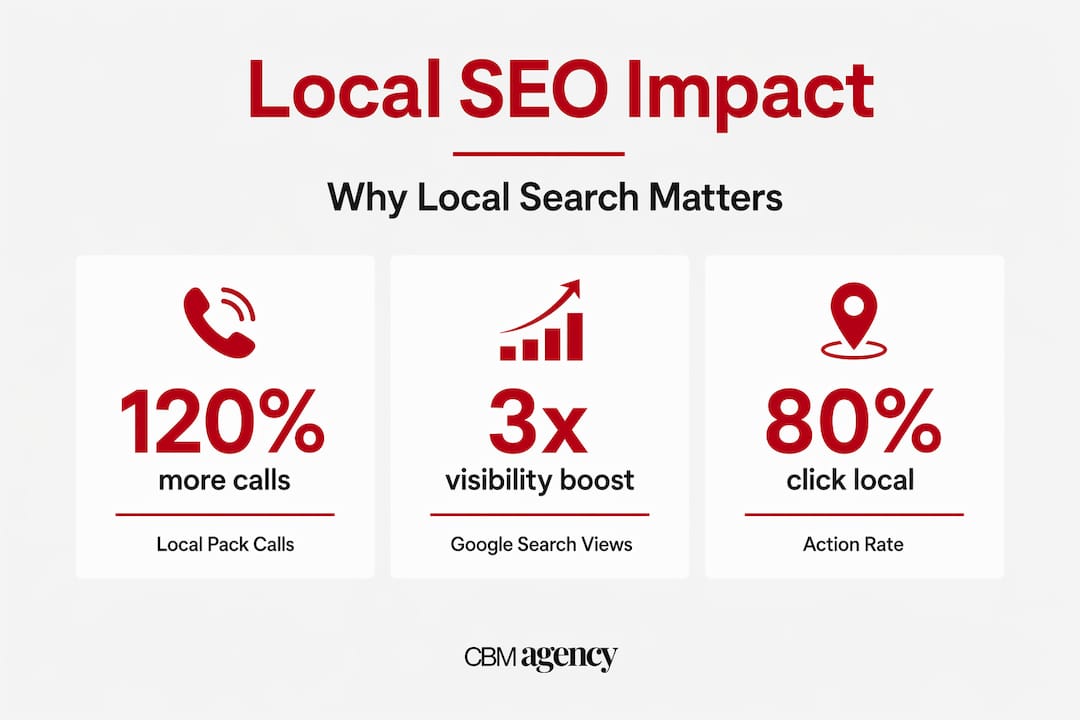
The business impact of the local pack is real and significant. Businesses appearing in the local pack receive over 120% more traffic compared to those that do not. More traffic translates directly to more calls, more direction requests, and more bookings.
Pro Tip: Use Google Business Profile Insights to see how many customers found you through the local pack versus direct searches. This tells you whether your prominence or relevance signals need more attention.
Practical local SEO strategies you can use now
Understanding what local SEO is only gets you so far. Here is how to actually improve it, starting with what moves the needle most.
Build and optimize your Google Business Profile
Claim your profile if you have not already. Fill in every field: business name exactly as it appears on your signage, your physical or service address, phone number, website, hours, and primary category. Match your profile details precisely with how your business appears on your website, your storefront, and any printed materials. Inconsistencies create confusion for Google and customers alike.
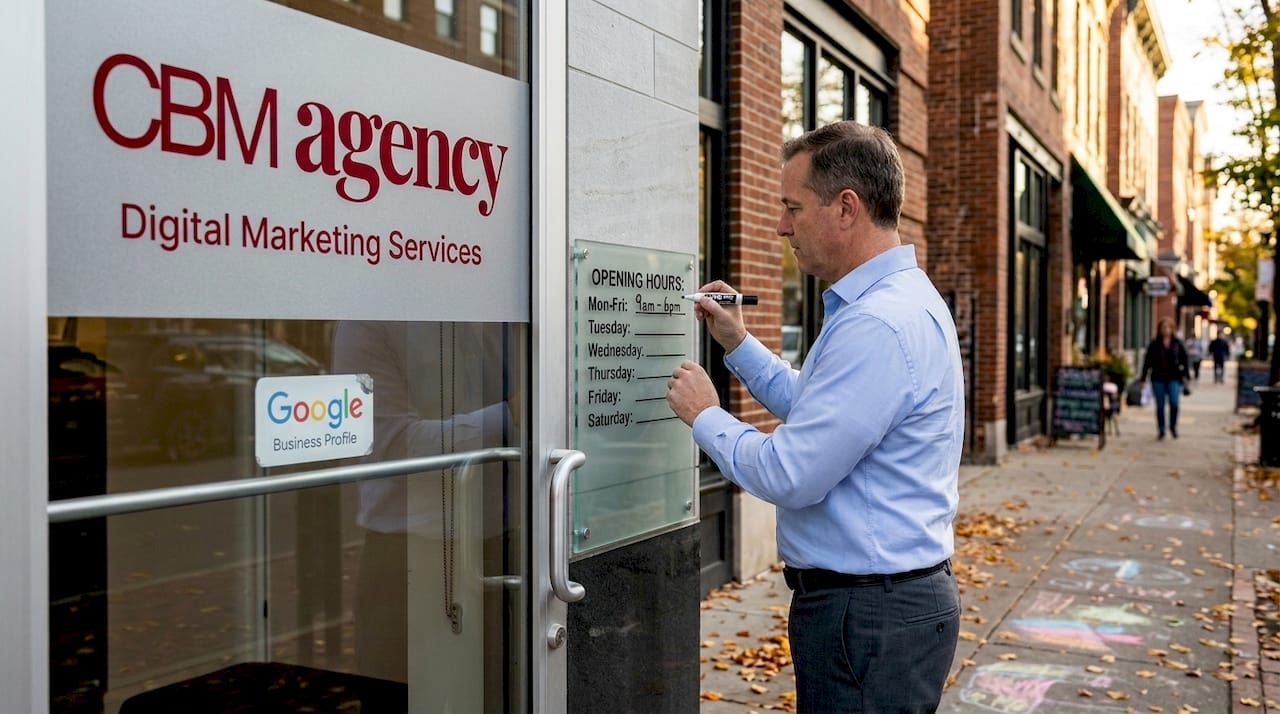
Add photos regularly. Profiles with photos receive significantly more engagement than those without. For a transportation or service business, photos of your vehicles, team, and service areas communicate professionalism before a customer ever contacts you.
Do geo-targeted keyword research
Generic keywords like "car service" attract national competition. Localized phrases like "airport car service Miami" or "corporate transportation in Houston" target the searcher who is ready to book. Use these phrases in your GBP description, your website's service pages, and your page titles.
For local search intent, "near me" searches and city-based modifier phrases are your most valuable targets. Build content around the specific neighborhoods, airports, and landmarks your business serves.
Manage citations and reviews consistently
- Audit your existing citations using a tool like Whitespark or BrightLocal. Identify anywhere your name, address, or phone number appears incorrectly.
- Submit your business to the major data aggregators first: Neustar, Data Axle, and Foursquare. They push your data to hundreds of secondary directories.
- Ask every satisfied customer for a review. A simple follow-up message after a completed service works well. Respond to every review, positive and negative, within 48 hours.
Citations help search engines verify your business information and build local prominence. Inconsistent citations, even small differences like "St." versus "Street," signal unreliability and suppress rankings.
Pro Tip: For transportation and service businesses, your citation profile on sites like Yelp and Apple Maps can directly drive bookings. These are not just SEO assets. They are customer acquisition channels on their own.
Common local SEO pitfalls to avoid
Local SEO rewards accuracy and punishes shortcuts. Knowing where businesses go wrong saves you from losing visibility that takes months to rebuild.
Google's eligibility rules require that a business either has a staffed physical location where customers visit during stated hours, or operates as a service-area business without a public storefront. A virtual address, a P.O. box, or a co-working space address used without in-person customer access can result in profile suspension.
Here are the most common problems to watch for:
- Duplicate profiles: Two profiles for the same business confuse Google and split your authority. If you find a duplicate, request its removal through Google.
- Inaccurate categories: Your primary category should describe your core business, not a wishful extension of it. Wrong categories reduce relevance scores.
- Unverified or abandoned profiles: A claimed but neglected profile with outdated hours or no photos performs worse than a fully maintained one.
- Service-area misrepresentation: Service-area businesses must accurately represent the areas they actually serve. Inflating your service area to cover regions you cannot realistically reach is a policy violation.
"Google emphasizes accuracy and real-world legitimacy for Business Profiles. Attempts to game location data risk suspension and lost visibility." — Google Business Profile Guidelines
Local rankings appear unstable day-to-day because every search query factors in the searcher's exact location at that moment. Tracking your rankings from one location does not show the full picture. Use rank tracking tools that simulate searches from multiple points within your service area to get a realistic read on performance.
My perspective on what local SEO really takes
I have worked with enough service businesses to say this plainly: most local SEO problems are not technical problems. They are discipline problems.
Businesses lose rankings not because the algorithm is mysterious but because their profile has conflicting information across platforms, their last review response was eight months ago, or they set up a service area profile with a misleading address because they wanted to rank in a city they barely cover. Investing in local SEO delivers the best return when the foundation is honest and maintained consistently.
What I have seen work consistently is treating your Google Business Profile like the most important page on your website. Because for local search, it often is. A well-maintained profile with genuine reviews, accurate service areas, and current photos will outperform a technically sophisticated website with a neglected GBP every single time.
The other thing I tell business owners: stop checking your ranking from your office and panicking when it shifts. Local rankings move daily. The real signal is trend over time, how many calls came in this week versus last month, how many customers mentioned finding you on Google. That is the number that matters.
Pair your local SEO with your broader SEO strategy and you build compounding visibility. One without the other leaves money on the table.
— Meshia
How Cbmagencymiami can move your rankings
If you run a transportation or service business and your phone is not ringing the way it should, your local SEO profile is likely the reason. Your fleet should not stay parked because the right customers could not find you online.
Cbmagencymiami specializes in Google Business Profile optimization for transportation and service businesses, from initial setup to ongoing management, citation cleanup, and review strategy. The results are real. Take a look at the Google Maps case study to see what a fully optimized local presence can produce in calls, bookings, and directions requests. If you want your business to show up when and where it counts, reach out for a consultation.
FAQ
What is local SEO?
Local SEO is the practice of optimizing your online presence to appear in location-based search results. It targets customers searching for products or services near a specific geographic area.
How does local SEO differ from regular SEO?
Regular SEO targets broad, non-location-specific queries to reach a national or global audience. Local SEO adds a geographic layer, using proximity, local citations, and Google Business Profile signals to rank for nearby searches.
What is the Google Local Pack?
The Google Local Pack is a block of three business listings that appears at the top of Google search results for local queries. It draws data primarily from Google Business Profiles and is the most visible real estate in local search.
Why do my local rankings change every day?
Local rankings fluctuate because Google factors in each searcher's exact location and device at the time of the query. A customer three miles away may see a different result than one standing in front of your building.
What is the most important factor in local SEO?
No single factor determines local rankings, but your Google Business Profile is the most controllable and impactful starting point. Accuracy, completeness, and consistent review activity all directly affect your position in local results.