

You run a solid operation. Your drivers are professional, your vehicles are clean, and your clients arrive on time. Yet your Google profile sits at 3.8 stars with fewer than 20 reviews, and a competitor down the street with half your quality has 150 reviews and a 4.6. That gap is costing you real bookings. Knowing how to improve local reviews is not optional in the transportation sector. It is the difference between your phone ringing and your fleet staying parked. This guide gives you a practical, compliant system to fix that.
Table of Contents
- Key takeaways
- How to improve local reviews: build your foundation first
- When and how to ask for reviews
- Responding to reviews the right way
- Staying compliant: what you cannot do
- Using review insights to improve operations and SEO
- My honest take on review management for transportation businesses
- Let Cbmagencymiami build your review system
- FAQ
Key takeaways
| Point | Details |
|---|---|
| Timing drives review volume | Ask for a review immediately after a completed trip when satisfaction is highest. |
| Your profile is the foundation | A fully optimized Google Business Profile makes it easier for customers to find and review you. |
| Response quality builds trust | Responding to every review within a week signals accountability and increases booking confidence. |
| Compliance protects your profile | Never incentivize reviews with discounts or gifts. It risks Google penalties that can erase your entire review history. |
| Feedback fuels operations | Recurring patterns in reviews reveal service issues faster than any internal audit ever will. |
How to improve local reviews: build your foundation first
You cannot collect reviews efficiently on a weak platform. Before you send a single review request, your online presence needs to be complete, accurate, and easy to find.
Start with your Google Business Profile. If you have not claimed it yet, do that today. The Google Business Profile setup process for transportation companies requires specific categories, service areas, and business hours that many owners skip. Every blank field is a missed opportunity. Customers who cannot find your hours, service zone, or phone number will not trust you enough to book, let alone leave a review.
Beyond Google, claim your profile on Yelp, the Better Business Bureau, and Meta (Facebook). For transportation businesses specifically, industry directories like TripAdvisor and local chamber listings carry real weight. Consistency matters across all of them. Your business name, address, and phone number need to match exactly on every platform.
Here is what your fully optimized Google Business Profile should include:
- Business name exactly as it appears on your vehicles and website
- Primary category set to the most specific transportation option available (e.g., Airport Shuttle Service, Limousine Service)
- Service area covering every zip code you actually serve
- Photos of your vehicles, drivers in uniform, and your office or dispatch area
- Business description that includes your core services and city names naturally
Once your profile is complete, create a direct Google review link using Google's review shortlink tool. Then generate a QR code from that link. Direct review links dramatically reduce friction and increase the rate at which satisfied customers actually complete a review. Place those QR codes on your vehicles, in your email signatures, and on printed receipts or booking confirmations.
Pro Tip: Place a laminated QR code card in your vehicle's back seat with a short, friendly message: "Enjoyed your ride? Leave us a quick Google review." No staff involvement required, and it works around the clock.
| Platform | Why it matters for transportation | Priority level |
|---|---|---|
| Google Business Profile | Drives local search and Google Maps rankings | High |
| Yelp | Trusted by consumers researching service quality | High |
| Facebook / Meta | Supports social proof and referral bookings | Medium |
| BBB | Builds credibility with corporate and B2B clients | Medium |
| Industry directories | Captures niche transport searches and airport traffic | Low to medium |
When and how to ask for reviews
Most transportation businesses either never ask, or ask at the wrong moment. Both kill your review rate.
Timing matters more than volume. The best moment to ask is right after a completed trip, when the experience is fresh and the client is satisfied. Waiting 48 hours drops response rates significantly. In transportation, that window is narrow. A client who just landed from a 12-hour international flight is not reviewing anyone. But a corporate passenger who just arrived at their meeting on time? That person is in the right headspace.
Here is a practical, step-by-step system for asking:
- Send a post-trip message within 30 minutes of drop-off. Use your CRM or booking system to trigger an automated SMS or email. Keep it short: "Thank you for riding with us today. If you had a great experience, a quick Google review means the world to us." Include your direct review link.
- Personalize where possible. Reference the specific trip. "We hope your ride to Miami International this morning was smooth." Tying the ask to specific outcomes makes it easier for clients to write something detailed and genuine.
- Send one follow-up only. If the client did not review after the first message, send one reminder at 72 hours. One. More than that feels pushy and damages the relationship.
- Train your drivers to verbally set the stage. A simple phrase at drop-off goes far: "We really appreciate feedback if you have a moment." The written request that follows feels less cold when the driver already mentioned it.
- Use a QR code as a backup for every interaction. Not everyone reads texts. Some clients prefer scanning. Cover both channels.
Pro Tip: If you use dispatch software like Limo Anywhere or Ground Alliance, check whether it has a built-in review request feature or an integration with reputation management tools. Automating the trigger at trip completion removes the human error of forgetting to ask.
Responding to reviews the right way
Getting reviews is half the job. How you respond to them is the other half, and most transportation businesses ignore it completely.
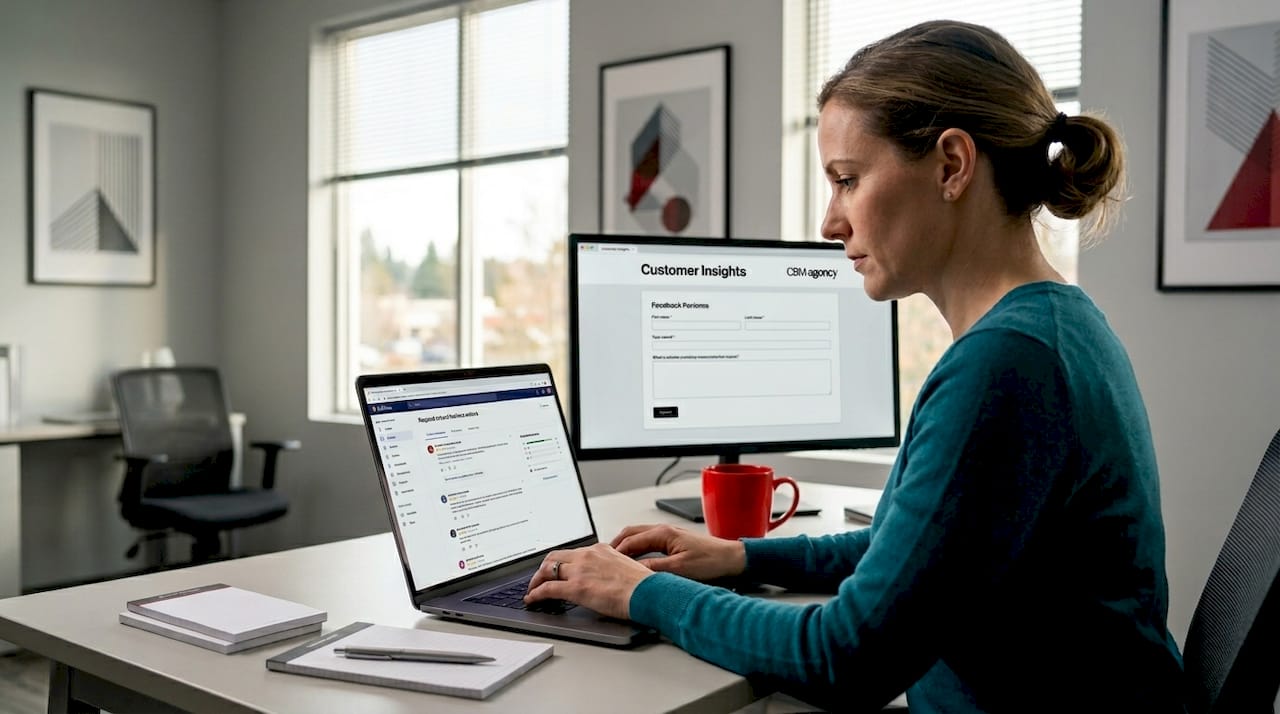
Responding within a week is the baseline expectation. Assign one person, whether that is a manager, dispatcher, or marketing contact, to own this task. When responses are inconsistent or delayed by months, it signals to prospective clients that nobody is paying attention.
For positive reviews, do not just write "Thanks!" That is worse than no response. Reference something specific about the booking, acknowledge the client genuinely, and invite them back. It only takes three sentences, but it shows real engagement.
Negative reviews require more care, but they are also your biggest public opportunity. Here is how to handle them:
- Acknowledge the issue publicly without being defensive. "We're sorry to hear this was not the experience we aim to provide" goes a long way.
- Invite the conversation offline. Provide a direct phone number or email so the client can resolve the issue privately. Taking the discussion out of the public thread is smart, but your acknowledgment must stay visible.
- Route the complaint internally. Operational ownership of negative reviews by the relevant department, whether that is dispatch, driver management, or billing, leads to faster resolution and signals that problems are taken seriously.
- Include natural location and service keywords in your responses. For example: "We appreciate your feedback on your Miami airport transfer" supports local SEO without sounding forced.
A business that responds transparently to both positive and negative reviews builds local trust faster than any ad campaign. Prospective customers read the responses more carefully than the reviews themselves.
Pro Tip: AI tools can help you draft responses faster, but always edit for tone before posting. A response that sounds like it was written by a bot does more damage than a delayed human one. AI supports efficiency but human judgment on tone is non-negotiable.
Staying compliant: what you cannot do
Many transportation business owners discover the hard way that some shortcuts in review generation can wipe out years of reputation work in a single policy violation.
Offering incentives for Google reviews is prohibited. That includes discounts on future rides, gift cards, referral credits, or any form of reward in exchange for a review. Google treats this as fake engagement and can remove your reviews, penalize your profile ranking, or suspend your listing entirely. The risk is not theoretical.
Review gating is equally dangerous. This is the practice of asking customers how their experience was before deciding whether to send them a review link. If you only forward satisfied customers to Google, you are filtering reviews by sentiment, which violates platform policies.
Here is what compliant review solicitation looks like:
- Send review requests to all customers after completed trips, not just the ones who expressed satisfaction verbally
- Encourage honest feedback, including constructive criticism
- Use any negative feedback received internally to address operational issues
- Reward your staff for delivering excellent experiences, not for generating reviews
"Shift your staff incentives toward great customer experiences, not review counts. When internal focus aligns with satisfaction, the reviews follow organically and compliantly."
Building a culture of genuine service transparency is what protects you long-term. Clients who feel heard, even when something went wrong, are more likely to leave honest and ultimately positive reviews.
Using review insights to improve operations and SEO
Reviews are not just a reputation tool. They are a feedback engine that tells you exactly where your service delivery is strong and where it breaks down.
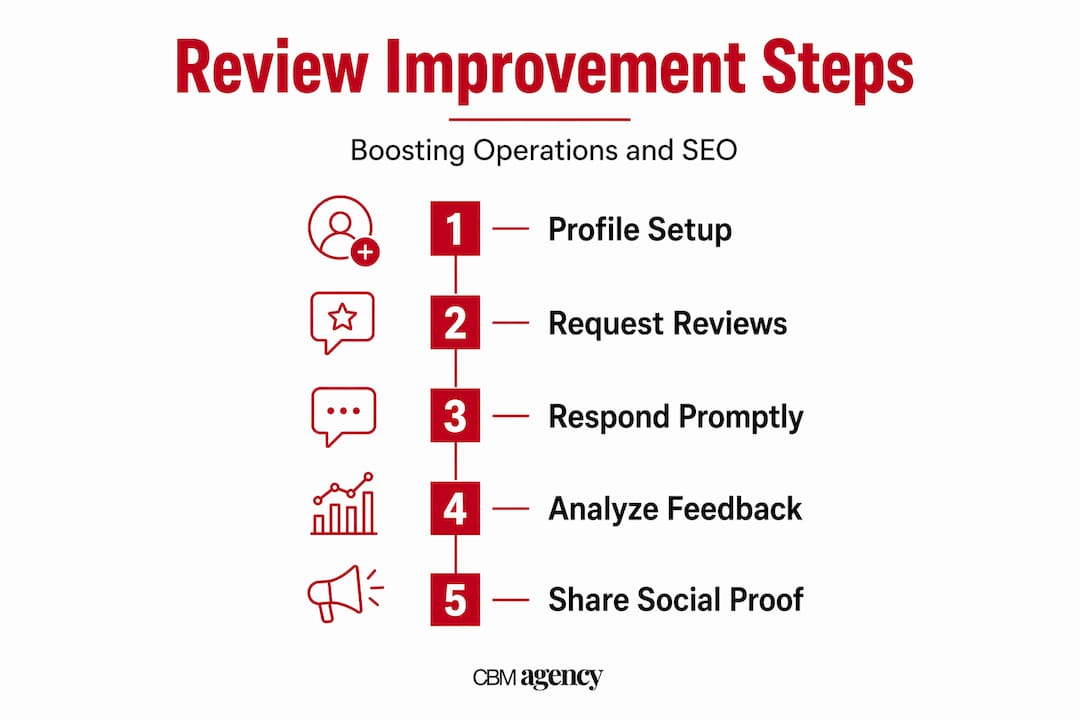
Recurring themes in reviews point to real operational patterns. If three clients in one month mention that drivers were difficult to reach by phone on arrival at the airport, that is a dispatch communication problem. No internal meeting would surface that insight as clearly as your public reviews.
Set aside time once a month to read through new reviews as a management team. Look for patterns, not individual complaints. When you spot a theme, assign an operational owner to address it and track whether the feedback changes over time.
On the SEO side, detailed reviews that mention your service type, location, and specific vehicle categories give Google more signals about what your business does and where. You cannot control what clients write, but you can make it easier to write detailed reviews by asking specific questions: "How was your driver during your ride to the Port of Miami?" A specific question produces a specific answer, and that answer often contains the exact keywords that help you rank.
Pro Tip: Share standout reviews as social proof across your website and Instagram. Screenshot them, remove the reviewer's last name for privacy, and post with a genuine caption. This increases positive feedback visibility and encourages other clients to contribute their own.
| Review insight type | What it reveals | How to act on it |
|---|---|---|
| Repeated complaints about wait time | Dispatch or scheduling bottleneck | Audit trip assignment and buffer time protocols |
| Praise for specific drivers | High-performing staff worth recognizing | Use in internal training and staff recognition programs |
| Confusion about pricing or billing | Communication gap at booking stage | Revise confirmation emails and pricing transparency |
| Compliments on vehicle cleanliness | Operational strength worth amplifying | Feature in marketing and highlight in review request messaging |
My honest take on review management for transportation businesses
I've worked with enough transportation operators to know that review management is usually the last thing on the to-do list. There's always a dispatch issue, a vehicle in the shop, or a corporate client needing attention. Reviews feel like a nice-to-have. They are not.
What I've learned is that the businesses most frustrated by their review profile are usually the ones doing the best operational work. They just never built the habit of asking. A driver who shows up five minutes early, welcomes the client by name, and handles luggage without being asked? That interaction is worth five stars. But if nobody ever asks, the client goes home, opens Netflix, and the moment is gone.
I've also seen the mistake of obsessing over a perfect five-star average. A balance of positive and negative reviews with thoughtful responses reads as more credible than a 5.0 with zero criticisms. Savvy buyers in the corporate travel and executive transportation space are skeptical of perfection. They want to see how you handle problems.
The hardest shift is treating review management as an operational system, not a marketing afterthought. That means a dedicated person, a defined workflow, and monthly review of what the feedback is actually telling you about your service. Exceptional service moments are the fuel. The system is the engine. You need both.
— Meshia
Let Cbmagencymiami build your review system
If you've read this far, you understand that improving local reviews for your transportation business requires more than asking clients nicely. It requires an optimized Google Business Profile, a timed and automated solicitation workflow, compliant practices, and a response strategy that builds trust at every touchpoint.
Cbmagencymiami works specifically with transportation and service businesses to build exactly that. From Google Business Profile optimization to local SEO strategies that turn your reviews into ranking signals, the team has a proven track record. Check out the Google Maps case study to see how service businesses in competitive markets have grown their visibility, review volume, and bookings through a structured approach. If you are ready to stop leaving reviews on the table, reach out to Cbmagencymiami for a consultation.
FAQ
How do I ask for a Google review without violating policies?
Send a review request to all customers after completed service, provide a direct link, and never offer compensation in exchange for the review. Keep the request honest and open to any type of feedback.
How many reviews do I need to rank higher on Google Maps?
There is no fixed number, but review volume, recency, and response rate all influence local rankings. Consistent activity over time matters more than hitting a specific count.
What should I say when responding to a negative transportation review?
Acknowledge the issue publicly, apologize without making excuses, and invite the client to contact you directly to resolve it. Avoid defensive language and route the complaint internally for follow-up.
Can I reward my drivers for getting good reviews?
You can reward drivers for delivering excellent customer experiences, but not for the act of generating reviews. The distinction matters. Internal recognition tied to service quality is compliant. Tying bonuses directly to review counts is not.
How often should I check and respond to my local reviews?
Check your profiles at least twice a week and respond within seven days of any new review. Assigning one person to own this task keeps the process consistent and prevents long gaps in response time.